Friday, September 21, 2018

Review: A Mencken Chrestomathy

A Mencken Chrestomathy A Mencken Chrestomathy by H.L. Mencken
My rating: 4 of 5 stars

It is fun when he is on your side, and a bit if a squirm when he isn't. There is some "fallen out of use" vocabulary that take a little getting used to; using cheese-monger as an insult for example. He loves to call things "buncombe" (old way of saying bull), he refers to people as "poltroons" (cowards), and he likes the word "bounders" (another way of saying cad or dishonorable man). Maybe it's just me. I never did find out exactly what he meant by Peruna. It appears to be a word for potato, so a fancy way of saying Vodka? The great internet couldn't help me. That's most of the archaic vocabulary. My favorite parts were the bits about men and women, the piece about the ancient Greeks being overrated, pedagogy, quackery, and music. A decent read of a famous misanthrope.

View all my reviews

Thursday, July 26, 2018

Review: Room to Dream

Room to Dream Room to Dream by David Lynch
My rating: 5 of 5 stars

I am a grateful fan.. Of course it was a five star book.

View all my reviews

Saturday, April 21, 2018

Review: The Origin of Consciousness in the Breakdown of the Bicameral Mind

The Origin of Consciousness in the Breakdown of the Bicameral Mind The Origin of Consciousness in the Breakdown of the Bicameral Mind by Julian Jaynes
My rating: 3 of 5 stars

A bestseller from 1978 which is still in print. My instincts said this was crazy, but parts of what he suggests are interesting - even if it seems like the kind of book people need to do bong hits before reading. The "hard" problem of consciousness is still a "hard" problem for me, and this is someone who took a stab at it. The opening salvo that consciousness is not necessary for concepts, thinking, reasoning, or learning is somewhat persuasive, but it is certainly a weak argument for the idea that consciousness did not exist until a few thousand years ago. His tracking of the bicameral mind sounds very much like a purely speculative theory that encompasses everything from religion to mental illness - which all come from some right-brain phenomena. I think he is probably correct that the nature of consciousness has changed through the millennia - a big piece of his evidence is that is in the Illiad is how all the characters are always obeying higher "gods" or "spirits" and the Odyssey has more introverted prose. Does this represent a change in consciousness? Who knows. Well Julian think he knows. His talk of how the right brain is responsible for many religious ideas, hallucinations, group experience may have some validity - but his examples of how society functioned just sounds like junk. There was an experiment recently that someone could stimulate a portion of your right front temporal lobe and you would have a transcendent, or religious experience, so maybe Julian was on to something. But currently, there is also a lot of evidence that the whole left-brain/right-brain theory is a bit misguided. Also, when you accidentally step on a dog's foot, and it squeals, is it not conscious? He would argue no (I assume), but my intuition strongly says Julian is dead wrong about that. So certainly I did not buy most of it, but as an interesting read, rather than a scientific tract, it has value.

View all my reviews

Tuesday, April 10, 2018

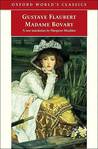
Review: Madame Bovary

Madame Bovary Madame Bovary by Gustave Flaubert
My rating: 3 of 5 stars

Granted, it's a masterpiece of literature but not my favorite one. One of the fun things about reading 19th century literature - A landau is a a horse-drawn four-wheeled enclosed carriage with a removable front cover and a back cover that can be raised and lowered. A fiacre is a small four-wheeled carriage for public hire. A tilbury is a a light, open two-wheeled carriage. A gig is a light two-wheeled carriage pulled by one horse, and a berlin is a covered four-wheeled traveling carriage with two interior seats. Initially noted for using two chassis rails and having the body suspended from the rails by leather straps, the term continued in use for enclosed formal carriages with two seats after the suspension system changed.

View all my reviews

Tuesday, March 6, 2018

Review: Before the Deluge: A Portrait of Berlin in the 1920s

Before the Deluge: A Portrait of Berlin in the 1920s Before the Deluge: A Portrait of Berlin in the 1920s by Otto Friedrich
My rating: 5 of 5 stars

This filled in so many gaps for me. An undergrad college course I took in European history was so dry and dull compared to this enlightening work. It flits between politics and art in a way that puts everything in a psychological context that never slows down. It contains as many references to artists and artistic life - Fritz Lang, Brecht, Dada, as it does to political goings on - Ludendorff, Schleicher, Hindenberg etc., and its very style of writing gives you a sense of wild instability. If most of what you've heard is "things were crazy", and people dumped out wheelbarrows full of money to trade the wheelbarrow, and you are fascinated by the film, literature, and music of the time - this is for you. This book, (from 1972 no less), really gives a sense for what a power vacuum feels like in a very tangible sense, while at the same time, demonstrating how the arts can flourish simultaneously, which raises more avenues of inquiry. Is a power vacuum a source of creativity as well as a political instability? Is a parliamentary system susceptible in ways the American system is not, or vice versa? Neither? Both? I'll be thinking. I found some clarification for some of the themes at the David Bowie Book Club podcast http://www.bowiebookclub.com, which is how I found this book. Easily a favorite history book.

View all my reviews

Wednesday, January 31, 2018

Review: Killer Tapes and Shattered Screens: Video Spectatorship from Vhs to File Sharing

Killer Tapes and Shattered Screens: Video Spectatorship from Vhs to File Sharing Killer Tapes and Shattered Screens: Video Spectatorship from Vhs to File Sharing by Caetlin Benson-Allott
My rating: 4 of 5 stars

I read this book in parallel with a video series by the same name curated in part by the author at the Alamo Drafthouse in Yonkers. As of now, Jan 2018, it seems as though she is going to be a future editor of "Cinema Journal" which is a scholarly academic journal on various film topics that I happen to subscribe to. The book starts out with some heavy theory from the 1970's, Christian Metz, apparatus theory, Marxist film theory, etc. that I need to do some reading on, but the rest of the book is close to a breeze, being that the movies referred to are fortunately available rather easily. When I read "Guide for the Perplexed" about Werner Herzog, I had to track down by hook or by crook, 30 or 40 movies to back fill my reading. These are all common titles for even a moderate horror movie fan. The thesis is essentially that the viewer's role as a spectator, (and maybe as an object themselves) has changed with the development of the VCR, and then the DVD, and current day VOD and Blu-Ray. It's convincing, and the final page of the concluding chapter packs a good punch - spectatorship is a power play, one way or another. An interesting read, with a few $5 words to look up here and there. Recommend if you're a gentleman or gentlewoman and a scholar, and a horror movie fan.

View all my reviews

Saturday, January 20, 2018

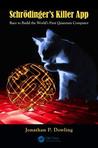
Review: Schrödinger's Killer App: Race to Build the World's First Quantum Computer

Schrödinger's Killer App: Race to Build the World's First Quantum Computer Schrödinger's Killer App: Race to Build the World's First Quantum Computer by Jonathan P. Dowling
My rating: 5 of 5 stars

Amazing book for the layperson by someone who is clearly a well-known and knowledgeable person in the field, Jonathan P. Dowling. I will absolutely have to read it again however, and note to anyone who reads this book, pay attention to those quantum gates, the CAT, the ENT, and the RAT as they are referred to heavily thereafter. I think any layperson will get a lot out of this book even if they have to glaze over at the myriad of characters involved and some of the engineering techniques that are hard to understand, (for the layperson). I believe I found this book recommended by Zach Weinersmith who writes "Saturday Morning Breakfast Cereal" and has his own book about cutting edge tech, "Soonish." It's got some humor in it, but quantum mechanics is hard to understand, but I'll take another stab at it down the road. Also, there is an interesting criticism of Roger Penrose toward the end of the book, regarding the "consciousness is weird, quantum physics is weird, therefore they're both related" kind of arguments made in "The Emperor's New Mind." John Searle's Strong AI hypothesis as related in this book is not something I'm as on board with as the author is, but I guess until proven otherwise, it'll have to do.

View all my reviews